
Workplace Violence Prevention Starts With Supporting Healthcare Staff

Workplace violence prevention in healthcare cannot be treated as only a security issue. It is also an employee experience issue, a retention issue, and a culture issue.
For nurses, physicians, technicians, transport teams, environmental services staff, front desk teams, and other frontline workers, safety is not an abstract policy. It is part of the daily work environment. When employees feel exposed to risk, unsupported during tense situations, or unsure whether help will arrive quickly, that experience can affect morale, trust, burnout, and long-term retention.
Healthcare organizations are under growing pressure to address workplace violence with more than training sessions and written protocols. Healthcare workers want to see meaningful safeguards that are practical, accessible, and built around the realities of their work.
An employee-centric approach starts with a simple question: What do healthcare workers need to feel protected, heard, and supported while delivering care?
Workplace Violence Is a Workforce Challenge
Healthcare workers face a disproportionate risk of workplace violence compared to many other professions. The CDC/NIOSH has noted that violence and intimidation in healthcare can make it harder for staff to provide quality patient care, especially when workers are afraid for their personal safety or affected by prior incidents.
AHRQ has also emphasized that workplace violence in healthcare is often underreported. Some workers may believe violence is simply “part of the job,” while others may feel that reporting will not lead to meaningful action.
That mindset is dangerous for both employees and organizations. When incidents are normalized or left unaddressed, the result is not only higher risk. It can also create distrust.
Employees may begin to feel that leadership is disconnected from what happens on the floor. They may hesitate to report concerns. They may become less confident that the organization has the systems, urgency, or accountability needed to protect them.
Workplace violence prevention must therefore be designed around the people most affected by it.
What Employee-Centric Prevention Really Means
An employee-centric approach does not mean adding one panic button, one training module, or one policy update and calling the problem solved.
It means designing violence prevention around the real experiences of healthcare staff.
That includes understanding where incidents are most likely to happen, which roles face the highest exposure, how quickly help can arrive, whether employees know how to call for support, and whether the organization can learn from reported events.
The American Nurses Association continues to identify workplace violence in healthcare as a top priority for nurses, calling attention to the need for safer, more respectful environments.
For healthcare leaders, this creates a clear responsibility: prevention cannot be built only from the administrative side. It must reflect the needs, concerns, and daily realities of frontline teams.
Listening Is the First Layer of Protection
One of the most important parts of an employee-centric safety strategy is listening.
Healthcare workers often know where the risk points are before the data shows it. They know which entrances feel vulnerable. They know where visibility is poor. They know which units experience repeated escalation. They know which workflows break down when staff need help quickly.
If these insights are not captured, safety planning becomes incomplete.
Leaders should create clear, simple ways for employees to share concerns before incidents escalate. That may include reporting tools, unit-level feedback loops, safety huddles, post-incident reviews, and regular communication between frontline staff, security, and leadership.
But listening only matters if it leads to action.
When employees report concerns and nothing changes, trust weakens. When concerns lead to visible improvements, trust grows.
Reporting Should Be Easy, Safe, and Actionable
A strong workplace violence prevention program depends on reporting. But reporting systems often fail when they are too complicated, too slow, or disconnected from operational follow-up.
AHRQ has highlighted multiple reasons healthcare workers may not report workplace violence, including the belief that no action will be taken, fear of negative consequences, and lack of easy reporting systems.
An employee-centric approach removes friction from reporting. Staff should not have to navigate confusing processes after a stressful event. They should know exactly how to report an incident, what happens next, and how the organization uses that information to improve safety.
This is where technology can play a meaningful role. Incident documentation, alert histories, location data, response timelines, and escalation records can help hospitals move from anecdotal awareness to operational insight.
The goal is not simply to collect data. The goal is to make the workplace safer because of what the data reveals.
Response Must Be Immediate and Coordinated
Employees need to know that when they call for help, the right people will be notified quickly and with enough context to respond.
In many healthcare environments, response still depends heavily on manual communication. A staff member calls for help. Someone relays the message. Security or supervisors try to determine the location. Other teams may or may not be notified. Documentation happens later, if at all.
This creates delay and uncertainty.
An employee-centric approach replaces uncertainty with structured response. When an employee activates a duress alert, the system should help answer critical questions immediately:
Where is the employee?
Who needs to respond?
What type of escalation is required?
Which teams need to be notified?
What actions should happen next?
How will the incident be documented?
This is where workplace violence prevention becomes more than a policy. It becomes an operational workflow.
How NovoTrax Supports Employee-Centric Workplace Violence Prevention
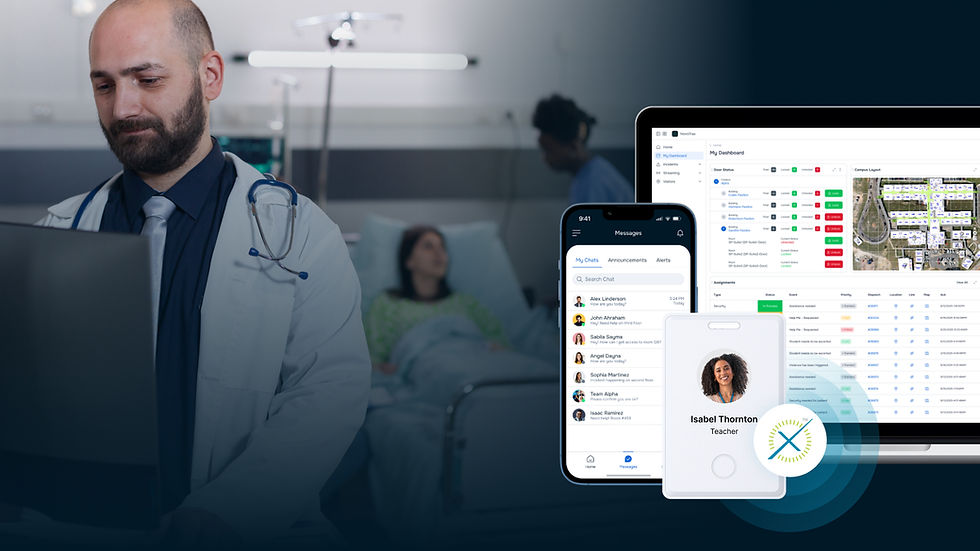
NovoTrax helps healthcare organizations build safer, more coordinated environments by connecting alerts, people, locations, systems, and response workflows into one intelligent platform.
For frontline healthcare workers, this can support a more visible and reliable layer of protection.
With NovoTrax, hospitals can move beyond disconnected safety tools and create coordinated workflows that support employees in real time. A staff duress alert can trigger location awareness, notify the appropriate responders, escalate to security or leadership, activate communication workflows, and support incident documentation.
This matters because employees do not only need a way to call for help. They need confidence that the organization can act quickly once help is requested.
NovoTrax can support healthcare teams through capabilities such as:
Wearable duress alerts that allow staff to request help quickly during tense or escalating situations.
Real-Time Location Services that help responders identify where support is needed.
Mass notification workflows that communicate with the right people based on role, location, or incident type.
Command Center visibility that gives leadership and security teams a clearer view of active events and response status.
System integrations that connect safety workflows with existing hospital infrastructure instead of creating another disconnected tool.
Incident documentation and reporting support that helps organizations identify patterns and improve prevention strategies over time.
The value is not only faster response. The deeper value is trust.
When employees see that safety concerns are connected to real workflows, visible response, and organizational accountability, workplace violence prevention becomes part of the culture.
Prevention Should Support Both Safety and Dignity
Healthcare workers want protection, but they also need respect, autonomy, and privacy. An employee-centric safety strategy should not make staff feel monitored in a punitive way. It should make them feel supported. The purpose of connected safety technology is not to watch employees more closely. It is to make sure that when risk appears, the organization can respond with speed, context, and coordination.
That distinction matters.
Hospitals must communicate clearly about how safety tools are used, what data is collected, who can access it, and how it supports staff protection. Transparency helps prevent mistrust and reinforces the idea that technology exists to support employees, not control them.
Stronger Prevention Builds Stronger Culture
Workplace violence prevention is not a one-time initiative. It is an ongoing commitment to safer work environments.
Healthcare organizations that take an employee-centric approach are better positioned to build trust with their teams. They listen to employees. They simplify reporting. They coordinate response. They use data to improve. They make safety visible.
That kind of approach can support more than incident reduction. It can also strengthen morale, improve retention, and reinforce the organization’s commitment to the people delivering care every day.
In healthcare, employees are the foundation of patient care. Protecting them should be central to every safety strategy.
NovoTrax helps hospitals turn that commitment into coordinated action — connecting alerts, workflows, communication, and response so healthcare workers feel safer, supported, and never alone when it matters most.


Comments